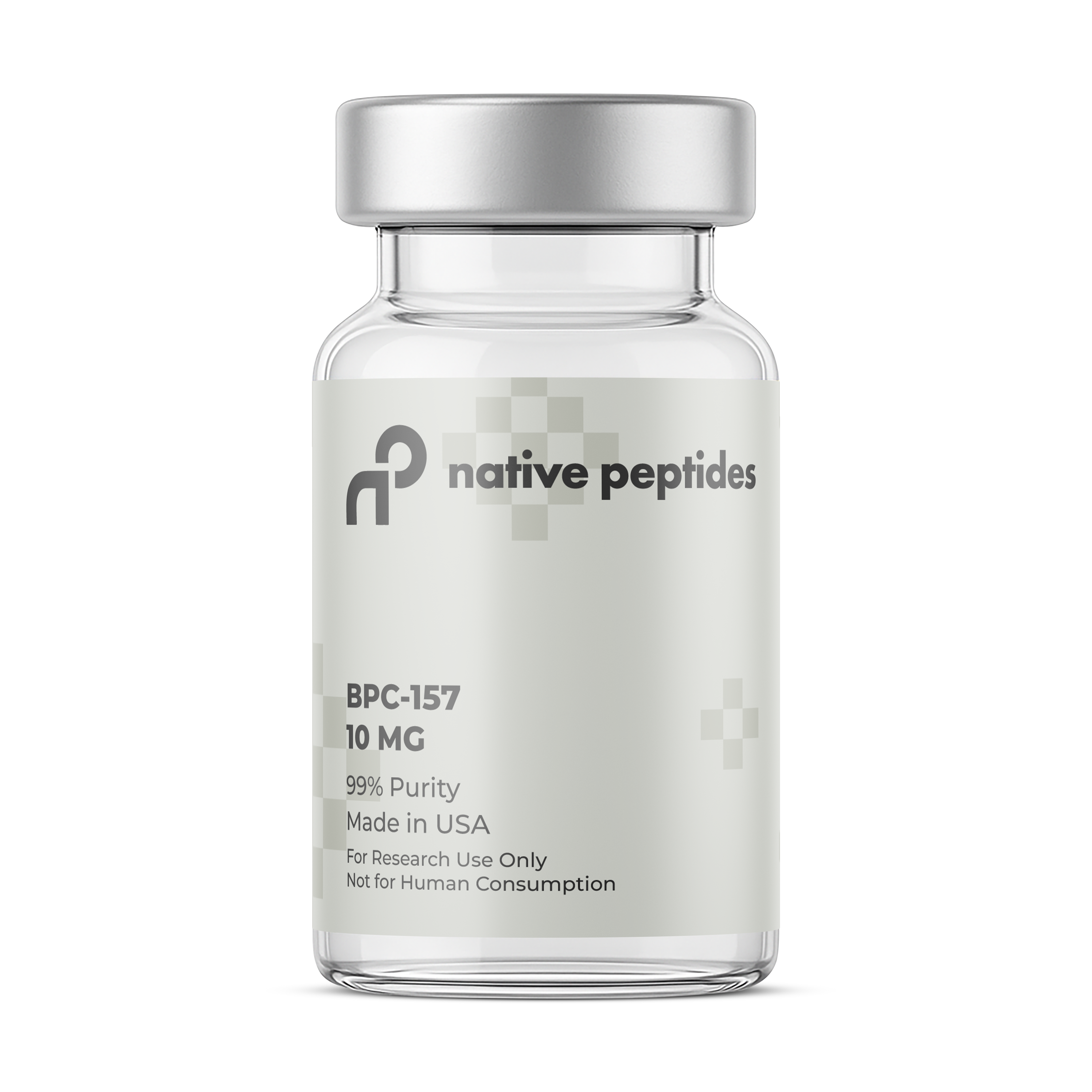
Product Overview
BPC-157 is a synthetic pentadecapeptide originally identified as a fragment of a larger endogenous gastric protein complex often referred to in the literature as Body Protection Compound (BPC). It is defined by a specific 15–amino acid sequence and has been studied in experimental settings for its molecular stability, solubility behavior, and broader biochemical activity under controlled conditions. In published preclinical work, BPC-157 is frequently characterized as relatively stable in simulated gastric environments, which is one reason it has been repeatedly selected for investigation across multiple laboratory models.
Within research environments, BPC-157 is commonly used as a molecular probe to explore mechanisms involved in tissue level signaling and cellular behavior, especially in contexts where researchers are mapping how cells respond to injury, stress, or remodeling cues. Experimental studies have used it to investigate cellular migration and adhesion, extracellular matrix organization, and the regulation of angiogenic signaling pathways that influence vascular responses. Additional preclinical work has examined how it may interact with pathways related to oxidative stress modulation, inflammatory signaling, and cytoskeletal organization, making it a useful tool for studying coordinated changes in cell structure, motility, and repair associated processes. Across these models, researchers may evaluate changes in markers associated with nitric oxide related signaling, growth factor activity, collagen organization, and stress response pathways, depending on the study design and endpoint. Importantly, all data associated with BPC-157 are derived exclusively from in-vitro systems and in-vivo animal research models. There is no established clinical efficacy profile for humans based on the preclinical literature alone, and research conclusions are limited to the experimental parameters of the studies conducted.
Storage & Handling
Molecular Information
Quality Assurance
Every batch undergoes comprehensive third-party testing
HPLC Analysis
High-Performance Liquid Chromatography confirms peptide purity and identity
Mass Spectrometry
Molecular weight verification through advanced mass spec analysis
Endotoxin Testing
LAL assay confirms endotoxin levels meet strict specifications
Related Research Peptides
Frequently purchased together