Product Overview
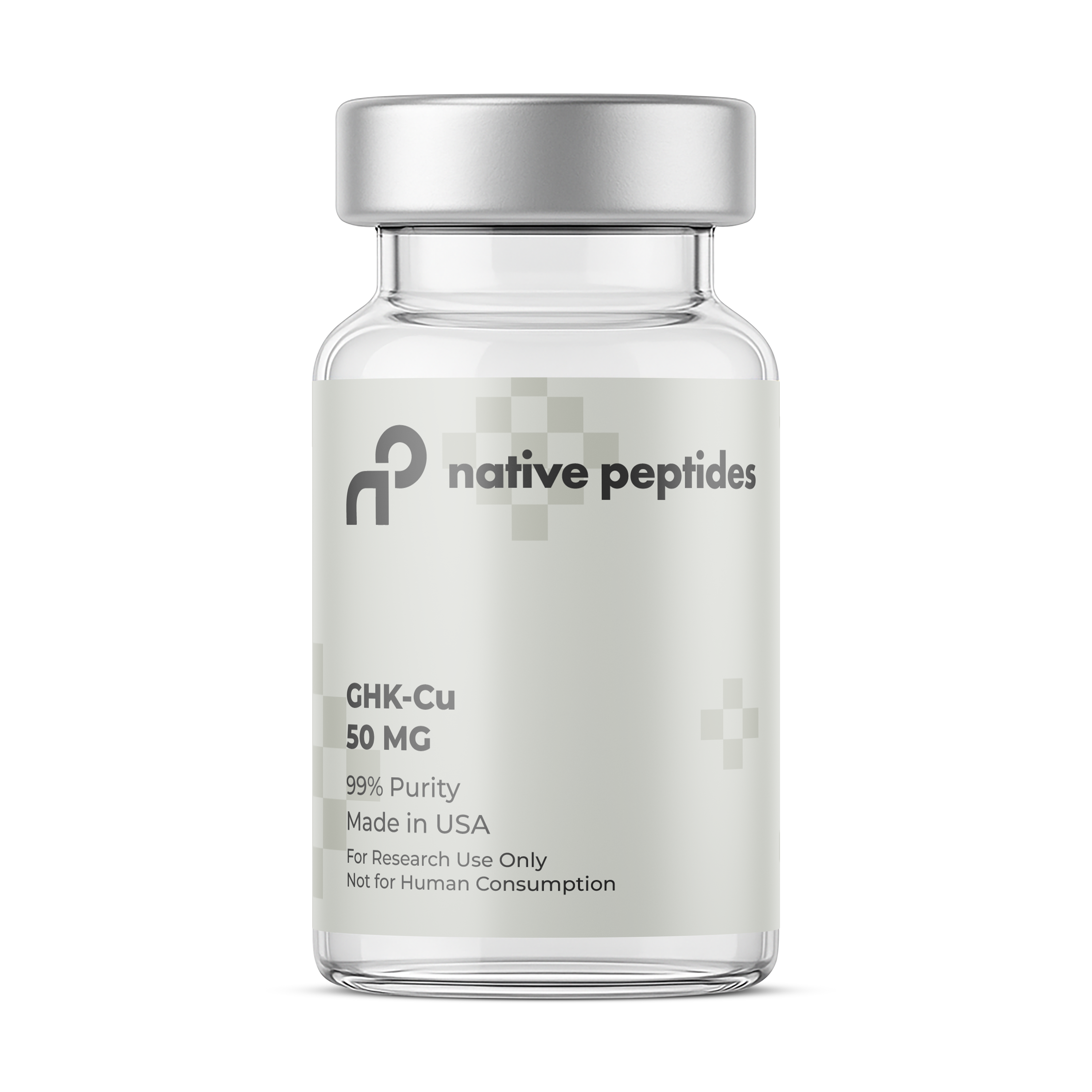
GHK-Cu is a research peptide composed of the tripeptide sequence Gly-His-Lys bound to copper(II) ions, forming a biologically active peptide–metal complex studied for its role in extracellular matrix modulation and cellular signaling. Preclinical research indicates that GHK-Cu regulates collagen production, gene expression, and enzymatic antioxidant pathways through copper-mediated redox mechanisms. It serves as a model compound for investigating peptide-driven tissue remodeling, metalloprotein regulation, and regenerative biochemistry. GHK-Cu (glycyl-L-histidyl-L-lysine copper complex) is a naturally occurring tripeptide–metal complex identified in biological fluids and extracellular matrices. The peptide exhibits high affinity for divalent copper ions and has been extensively studied in laboratory research for its role in cellular signaling, tissue remodeling, and copper homeostasis.
Scientific investigation of GHK-Cu focuses on its biochemical interactions with fibroblasts, endothelial cells, immune cells, and neuronal tissue models. All discussion herein is limited strictly to in-vitro and in-vivo animal research contexts and does not imply clinical, cosmetic, or therapeutic use.
Storage & Handling
Molecular Information
Quality Assurance
Every batch undergoes comprehensive third-party testing
HPLC Analysis
High-Performance Liquid Chromatography confirms peptide purity and identity
Mass Spectrometry
Molecular weight verification through advanced mass spec analysis
Endotoxin Testing
LAL assay confirms endotoxin levels meet strict specifications
Related Research Peptides
Frequently purchased together