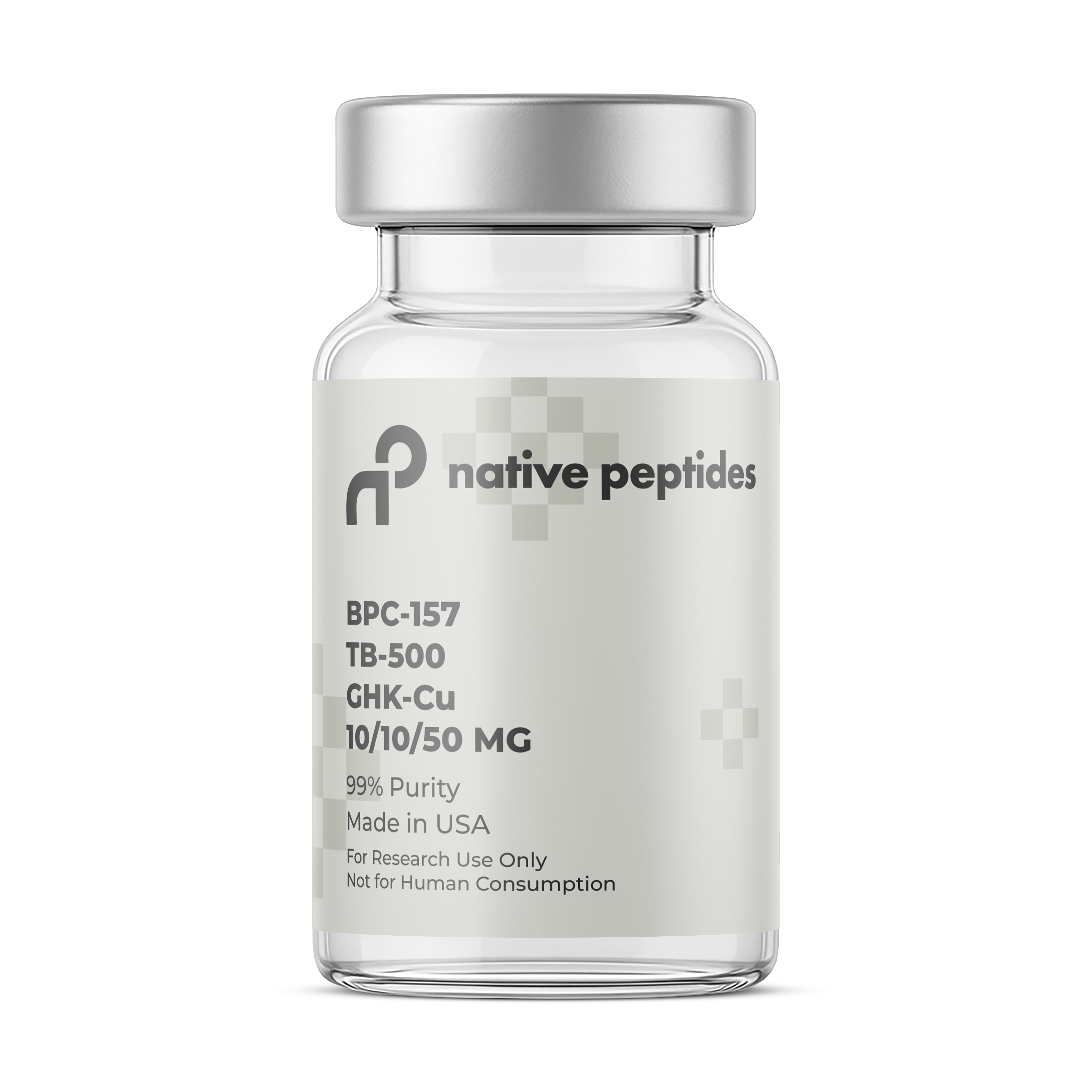
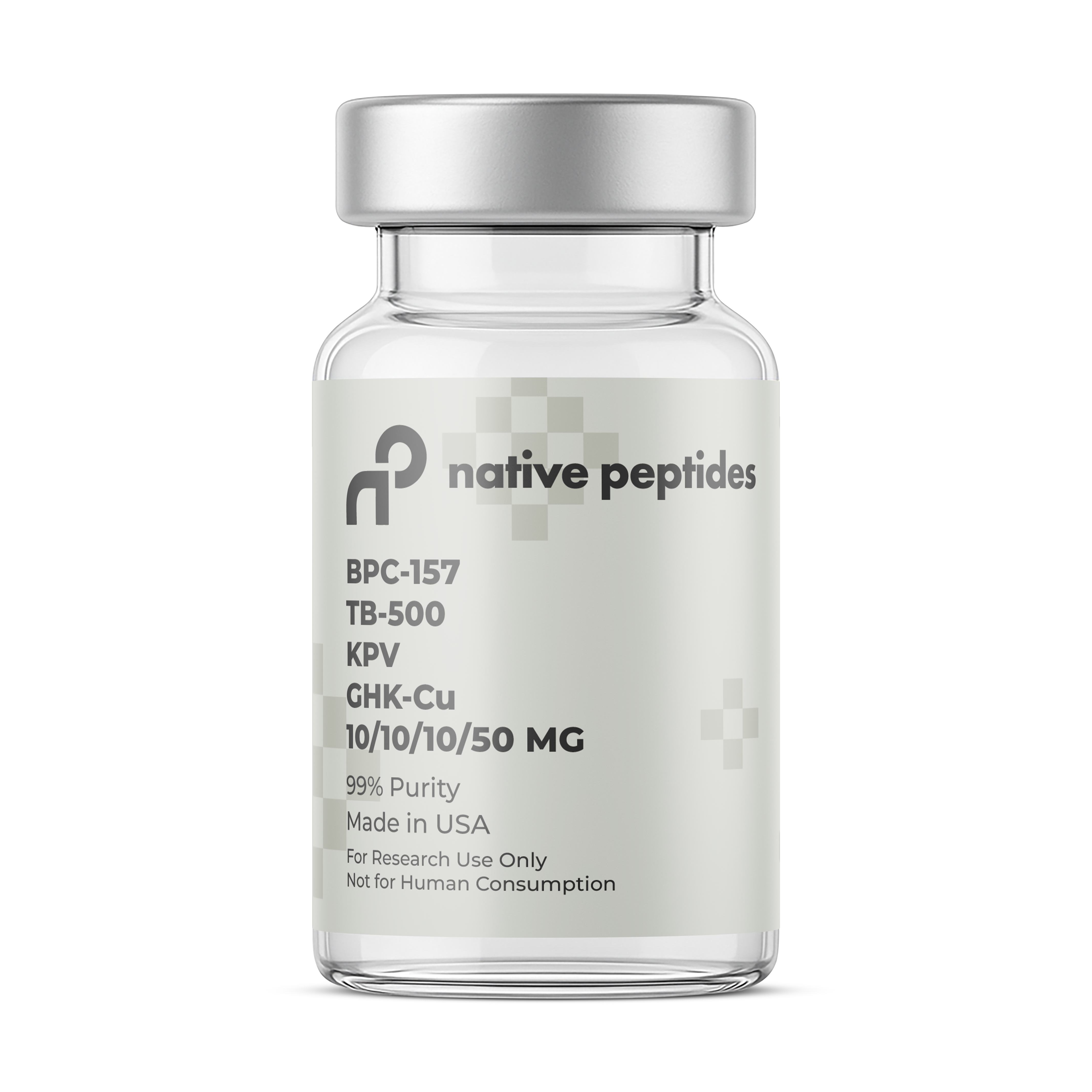
Product Overview
BPC-157 / TB-500 / KPV / GHK-Cu is a multi-peptide research formulation composed of BPC-157, TB-500, KPV, and GHK-Cu, totaling 80 mg, designed for laboratory investigation of peptide interactions within controlled experimental systems. Each component peptide has been independently examined in preclinical research environments for roles in cellular communication, molecular signaling regulation, and biochemical processes associated with cellular maintenance and tissue response pathways. Within experimental models, these peptides are referenced in studies investigating extracellular matrix dynamics, angiogenic signaling, inflammatory pathway modulation, and peptide-mediated cellular migration mechanisms. When studied collectively, the blend enables researchers to explore potential interactions between multiple peptide signaling pathways and examine coordinated molecular responses within complex cellular environments under defined laboratory conditions.
In research settings, BPC-157 / TB-500 / KPV / GHK-Cu is utilized as a molecular tool to investigate peptide-mediated regulation of cellular stress responses, signaling pathway coordination, and tissue-associated biochemical processes within in vitro and animal research models. Scientific literature describing the individual components references experimental applications involving cytoskeletal organization, intercellular communication, oxidative stress signaling, and peptide involvement in cellular remodeling processes within controlled investigative systems. Observations concerning molecular interactions, signaling responses, and biochemical activity associated with this peptide combination are derived exclusively from non-clinical experimental models and are reported as descriptive findings within laboratory research contexts designed to examine complex peptide signaling and cellular response mechanisms.
Storage & Handling
Molecular Information
Quality Assurance
Every batch undergoes comprehensive third-party testing
HPLC Analysis
High-Performance Liquid Chromatography confirms peptide purity and identity
Mass Spectrometry
Molecular weight verification through advanced mass spec analysis
Endotoxin Testing
LAL assay confirms endotoxin levels meet strict specifications
Related Research Peptides
Frequently purchased together